Understanding the Difference
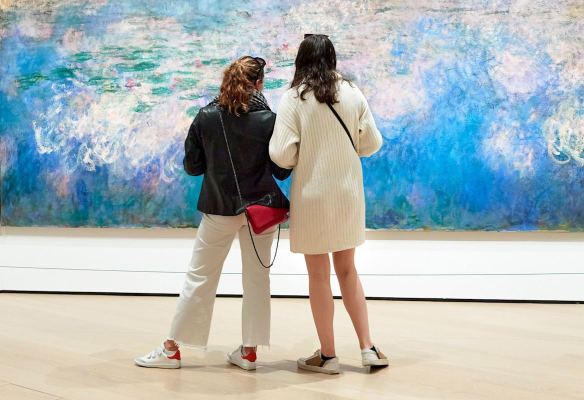
Have you ever stood in front of a painting in a museum and wondered whether you were looking at modern art or contemporary art? The two terms are often used interchangeably in everyday conversation, yet in the world of art history they describe two very different periods. Understanding the distinction not only helps us speak more accurately about art, but also deepens our appreciation of the ideas that shaped each era.
According to the Museum of Modern Art (MoMA), Modern Art generally refers to artistic movements that developed from the 1860s through the 1960s or early 1970s. Contemporary Art, by contrast, refers to art created from roughly 1980 to the present. Google Arts & Culture places the transition in the late 1960s and 1970s, while the Museum of Fine Arts, Boston broadly defines Contemporary Art as work produced from the second half of the twentieth century to today. Although the exact dates vary slightly among institutions, they agree on one important point: Modern Art is a historical movement, while Contemporary Art is the art of our own time.
Modern Art: Breaking with Tradition
Modern Art emerged during an era of remarkable change. Industrialization, scientific discovery, urban growth, and photography transformed the way people experienced the world. Artists responded by questioning centuries-old traditions and searching for new ways to express reality, emotion, and imagination.
Rather than striving for photographic accuracy, modern artists experimented with color, composition, perspective, and abstraction. Their goal was no longer simply to reproduce what they saw, but to interpret what they felt and understood.
Some of the defining movements of Modern Art include:
- Impressionism
- Post-Impressionism
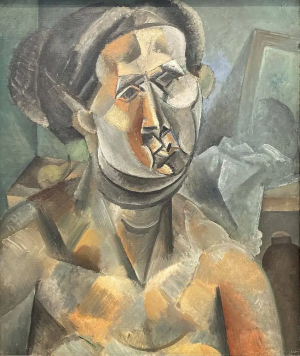
- Cubism
- Surrealism
- Abstract Expressionism
These movements differed in style, but all shared a willingness to challenge convention and redefine what art could be.
Five Artists Who Shaped Modern Art
The Guggenheim Museum, New York
Among the most influential figures of the Modern period are:
- Claude Monet
- Vincent van Gogh
- Pablo Picasso
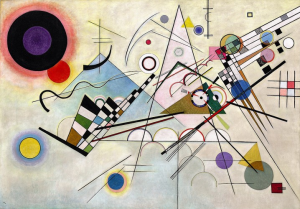
- Wassily Kandinsky
- Jackson Pollock
Each expanded the possibilities of artistic expression and continues to influence artists working today.
Contemporary Art: A Reflection of Today’s World
If Modern Art was about breaking the rules, Contemporary Art is about exploring possibilities. There is no single style that defines today’s artists. Traditional painting exists alongside photography, installation art, digital media, sculpture, performance, and works created with emerging technologies.
Contemporary artists often respond directly to the issues that shape modern life. Identity, environmental concerns, technology, globalization, politics, and cultural change all find their way into today’s galleries and museums. In many cases, the idea behind the artwork is just as important as the finished object itself.
Five Influential Contemporary Artists
Among today’s most recognized contemporary artists are:
- Yayoi Kusama
- Ai Weiwei
- Cindy Sherman
- Damien Hirst
- Julie Mehretu
Although their work varies dramatically in style and medium, each offers a unique perspective on the world we live in today.
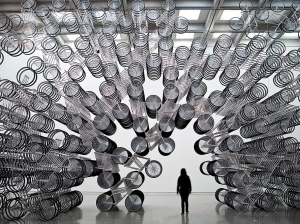
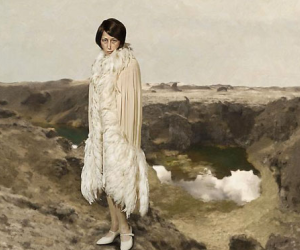
Cindy Sherman, (Brisbane: Queensland Art Gallery, 2016).
Why the Terms Are So Often Confused
The confusion is understandable. Outside the art world, modern simply means “current” or “up to date.” In art history, however, Modern Art refers to a specific chapter in history that has already concluded.
Contemporary Art, by contrast, is still unfolding. Every year brings new artists, new technologies, and new ways of thinking about creativity. Future historians may eventually divide our current era into new movements, just as they did with Modern Art.
Looking at Art with New Eyes
Knowing whether a work belongs to Modern Art or Contemporary Art isn’t about memorizing dates or labels. It’s about understanding the questions artists were trying to answer.
Modern artists asked how painting could move beyond tradition and discover new forms of expression. Contemporary artists ask how art can engage with the rapidly changing world around us. Both periods celebrate innovation, but each reflects the concerns of its own time.
The next time you walk through a museum, visit a gallery, or browse artwork online, take a moment to ask not only what you’re looking at, but when and why it was created. That simple shift in perspective can transform the experience from merely viewing art to truly understanding it.
References
Museum of Modern Art (MoMA). What Is Modern Art? https://www.moma.org/collection/terms/modern-art
Museum of Modern Art (MoMA). Contemporary Art. https://www.moma.org/collection/terms/contemporary-art
Google Arts & Culture. What’s the Difference Between Modern and Contemporary Art? https://artsandculture.google.com/
Museum of Fine Arts, Boston. Contemporary Art Collection. https://www.mfa.org/collections/contemporary-art