The Universal Language of Meaning
Art has always done more than record what the eye can see. Long before written language, people used images to express beliefs, tell stories, preserve traditions, and communicate ideas that words alone could not capture. This use of visual symbols is what many people describe as symbolic art—art that conveys meaning through recognizable images, colors, forms, or objects that represent something beyond their literal appearance.
Although “symbolic art” is a widely understood descriptive term, it is not the name of a formal art movement. Art historians instead distinguish it from Symbolism, the late nineteenth-century European movement that flourished from the 1880s into the early twentieth century. Authorities including the Tate, The Metropolitan Museum of Art, and Encyclopaedia Britannica describe Symbolism as a reaction against realism and naturalism, emphasizing imagination, emotion, dreams, spirituality, and the inner life. At the same time, these institutions acknowledge that artists have relied on symbols throughout human history. In that broader sense, symbolic art is one of the oldest and most enduring forms of visual expression.
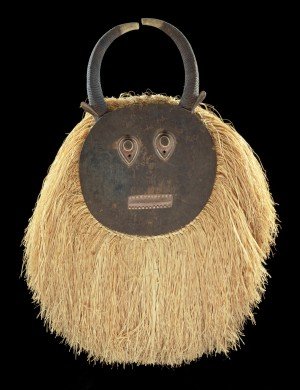
Baule, Ivory Coast from Minneapolis Institute of Art
Symbols Before History
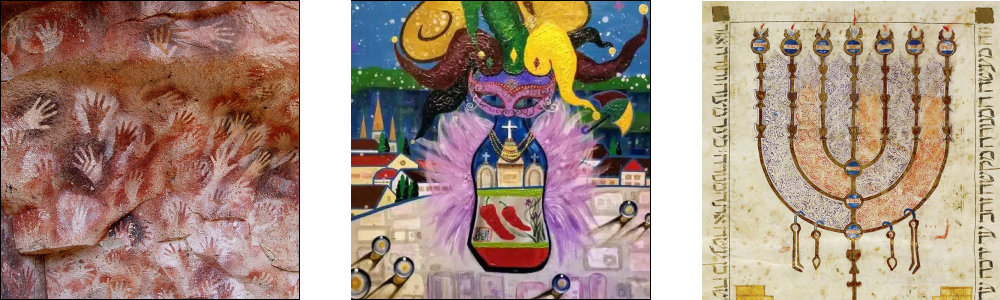
The earliest examples of symbolic art predate recorded history by tens of thousands of years. The animals painted on cave walls, the carved figures of ancient civilizations, and the ceremonial objects created by Indigenous cultures were often intended to communicate ideas rather than simply depict everyday life.
Across cultures, symbols have represented:
- Spiritual beliefs
- Fertility and renewal
- Power and authority
- Protection
- Life, death, and the afterlife
Although the meanings of individual symbols differ from one culture to another, the human impulse to communicate through visual metaphor is remarkably universal.
Symbolism in Western Art
Throughout Western art history, symbolism has appeared in almost every major period. Medieval and Renaissance painters filled their works with visual clues that audiences of the time immediately understood. A lily might represent purity, a skull the brevity of life, and a dove peace or the presence of the Holy Spirit. These symbols enriched a painting by inviting viewers to look beyond its surface.
By the late nineteenth century, a group of European artists made symbolism itself the central purpose of their work. Rather than depicting the visible world realistically, they sought to express dreams, mythology, mystery, and spiritual experience.
Artists Known for Symbolic Imagery
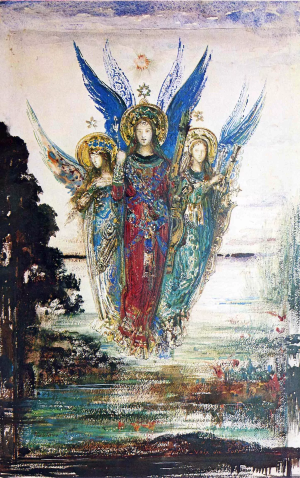
Among the Western artists most closely associated with symbolic imagery are:
- Gustave Moreau
- Odilon Redon
- William Blake
- Gustav Klimt
- Frida Kahlo
Although these artists worked in different styles and periods, each used imagery that encouraged viewers to interpret deeper layers of meaning rather than simply observe appearances.
Symbolic Traditions Around the World
Symbolic art is by no means limited to Europe. Anonymous artists working across the globe have created visually rich traditions in which every shape, pattern, or color may carry cultural significance.
Examples include:
- Prehistoric cave paintings in Europe and Indonesia
- Ancient Egyptian wall paintings and tomb decoration
- Australian Aboriginal rock and desert paintings
- Native American pottery and woven textiles
- African ceremonial masks and sculptures
In many of these traditions, symbolism preserves cultural knowledge, expresses spiritual beliefs, and connects generations through shared visual language. The identity of the individual artist is often less important than the continuation of the tradition itself.
Why Symbolic Art Still Matters
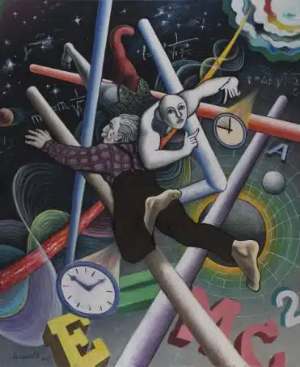
Contemporary artists continue to use symbolism because some experiences cannot be fully explained through literal representation. A circle may suggest unity or eternity. A path can represent life’s journey. Light and shadow may symbolize hope and uncertainty. Colors themselves often carry emotional or cultural associations that enrich an artwork without requiring explicit explanation.
This openness is one of symbolic art’s greatest strengths. Symbols rarely have a single fixed meaning. Instead, they invite viewers to bring their own memories, beliefs, and experiences to the work, creating a conversation between artist and audience.
Looking Beyond the Surface
Symbolic art reminds us that seeing is only the beginning of understanding. Whether carved into ancient stone, painted on a medieval altar, woven into an Indigenous textile, or expressed through contemporary abstraction, symbols allow artists to communicate ideas that transcend language and time.
The next time you encounter a work of art, pause before asking, “What is this a picture of?” Instead, consider asking, “What might this represent?” That simple shift in perspective often reveals meanings that are both deeply personal and surprisingly universal—one of the reasons symbolic art continues to resonate across cultures and generations.
References
- Tate. Symbolism. https://www.tate.org.uk/art/art-terms/s/symbolism
- The Metropolitan Museum of Art. The Symbolist Movement. https://www.metmuseum.org/
- Encyclopaedia Britannica. Symbolism (Art). https://www.britannica.com/art/Symbolism-art
- Janson, H. W. & Janson, Anthony F. History of Art. Pearson.